
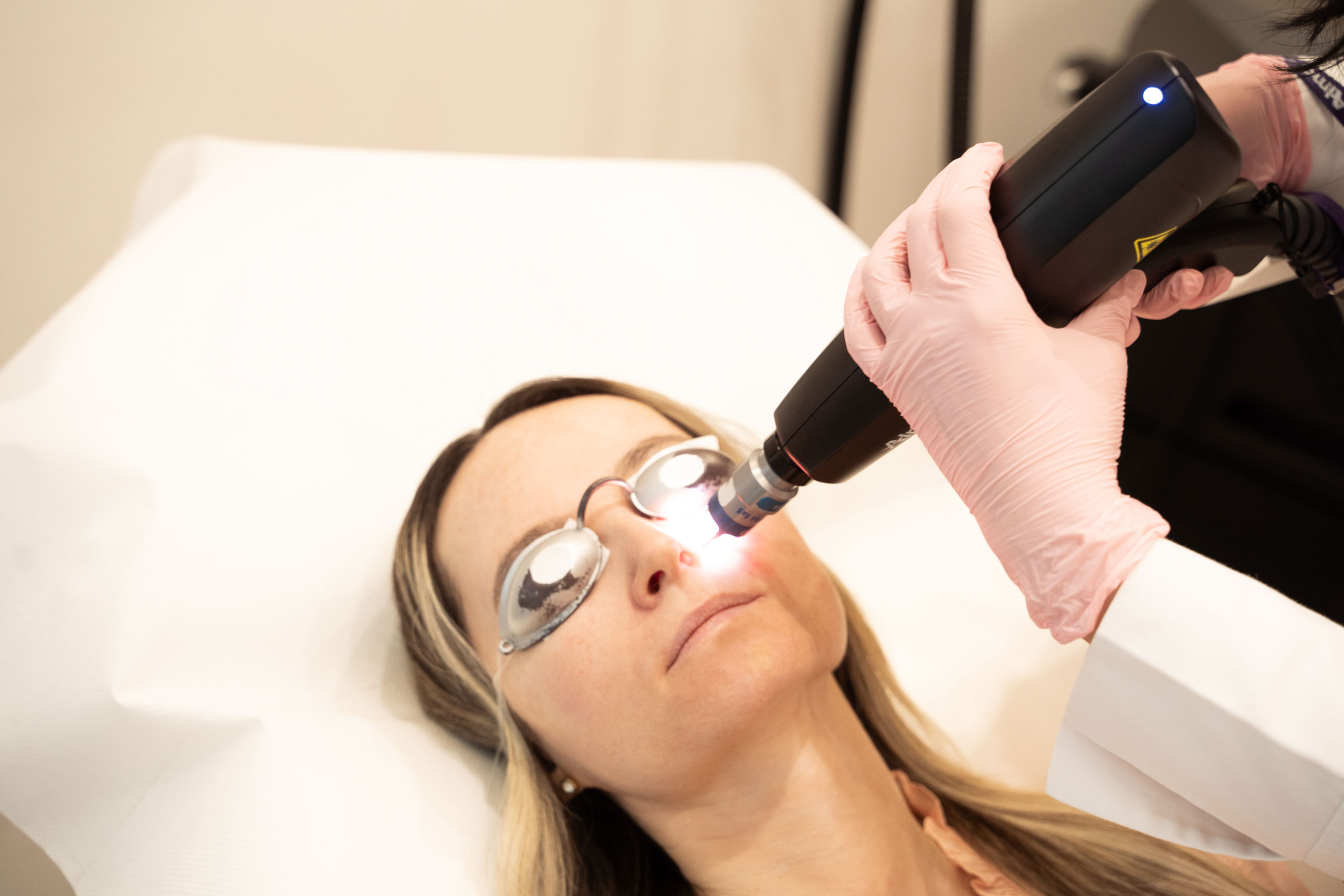
Fractional laser is the modern solution for facial rejuvenation, which means firmness, improved texture and fast recovery.
More than 65% of working women avoid cosmetic procedures that require long recovery time, even if they notice loss of firmness, fine wrinkles or dull skin, data from international medical literature show. At the same time, after the age of 35-40, collagen synthesis progressively decreases by about 11TP33T per year, and these changes become visible on the face.
In modern dermatology, these needs have led to the development of state-of-the-art fractional laser technologies specifically designed for effective facial rejuvenation with minimal recovery time, adapted to today's lifestyle. Dr. Amalia Anghel, primary dermatovenerology physician, Doctor of Medical Sciences at Skinmed Clinic explains how these medical technologies work.
Why fractional laser in facial rejuvenation?
Skin ageing is not a superficial phenomenon. It involves deep structural changes: degradation of collagen and elastin, thinning of the dermis and alteration of the extracellular matrix. Topical treatments can temporarily improve the skin's appearance, but real regeneration requires stimulation of deep biological mechanisms.
The fractionated laser works by creating controlled micro-zones of stimulation, triggering:
- synthesis of new collagen;
- dermal remodeling;
- improving skin firmness;
- even skin texture and tone.
Dr. Amalia Anghel: "Modern technologies allow precise parameter customization, increasing efficiency and significantly reducing discomfort and recovery time.".
Fractional laser with combined action: deep regeneration
Fractional lasers using combinations of energies allow multiple signs of skin ageing to be addressed simultaneously. This technology is particularly indicated for patients with visible structural changes in the skin.
What problems it can correct:
- fine and medium wrinkles;
- enlarged pores;
- uneven texture;
- superficial pigmentation spots;
- loss of skin firmness.
Procedure duration and recovery
A session lasts on average 30-45 minutes. The recovery is moderate and controlled, consisting of transient redness and warmth for a few days, followed by a progressive regeneration process.
Who it's for:
- patients with moderate signs of ageing;
- those who want visible results on their skin texture;
- people who can accept short and controlled downtime.
Fractional non-ablative laser: rejuvenation without a break from everyday life
"For active patients, there are non-ablative fractional laser options, which are gentle but effective. They stimulate collagen deep down without affecting the superficial layer of the skin"says Dr. Amalia Anghel.
Benefits:
- improving skin firmness;
- smooth fine wrinkles;
- increased brightness;
- look fresher and more rested.
Minimal recovery
The redness is inconspicuous and short-lived, allowing you to resume daily activities quickly. Results appear progressively over the following weeks as new collagen forms.
How many sessions are needed for laser facial rejuvenation?
The number of sessions is determined on an individual basis following dermatologic evaluation. In general:
- more intense procedures require 1-3 sessions;
- non-ablative options require 2-4 sessions for progressive results.
"Modern rejuvenation is no longer about aggressiveness, but about respecting the skin's biology and adapting the treatment to the patient's lifestyle"emphasizes the Skinmed Clinic specialist.
Why is the cold season ideal for laser treatments?
Fall and winter are optimal times for fractional lasers because:
- UV exposure is reduced;
- the risk of post-procedure hyperpigmentation is lower;
- skin has favorable conditions for deep regeneration.
Source: csid.ro